
Why most ROI calculators are misleading
Vendor ROI calculators show you a 12-month payback because they count maximum savings against minimum cost. They leave out: access points, installation labor, training, integration work, change-management time, and the gradual ramp before you reap full savings.
Here’s the un-glossed math for a hypothetical 50-store regional grocery chain. We’ll use a real-world midsize operation: 30,000 SKUs per store, $25/hr fully-loaded labor cost, currently doing manual price-tag work.
The full deployment cost (year 1, all 50 stores)
One-time costs:
| Item | Per store | Total (50 stores) |
|---|---|---|
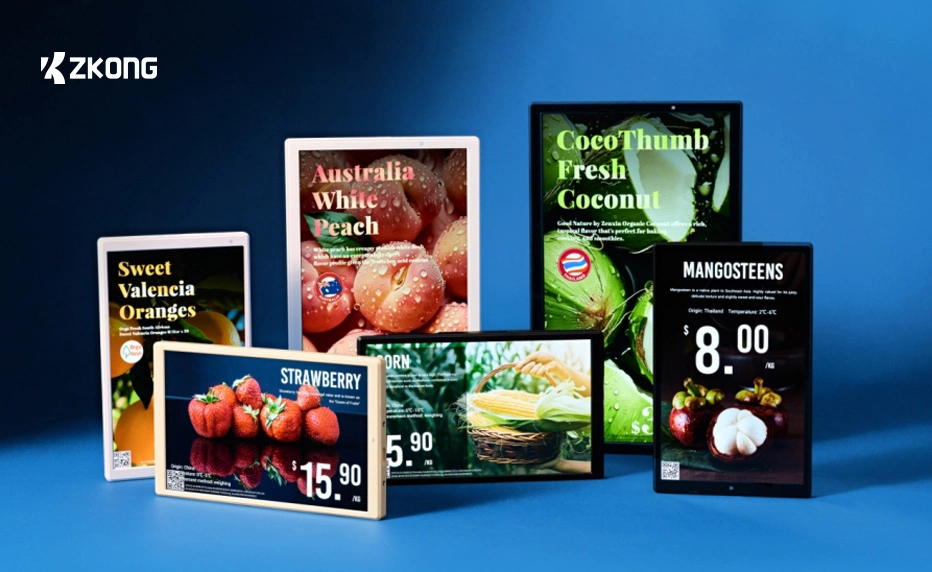
| 30,000 ESL labels @ $4 average | $120,000 | $6,000,000 |
| 50 access points @ $200 | $10,000 | $500,000 |
| Installation labor (~80 hrs/store @ $40) | $3,200 | $160,000 |
| POS / ERP integration (one-time) | $0 (per-store) | $25,000 (centralized) |
| Staff training (8 hrs × 6 staff × $25) | $1,200 | $60,000 |
| Total upfront | ~$134,400 | $6,745,000 |
Annual recurring costs:
- Cloud platform SaaS: $0 (included with ZKong purchase) – $30,000/year per chain (depending on vendor)
- Battery replacements: ~$0.50/label × 5,000/year = $2,500/store = $125,000/yr chain-wide
- Access point maintenance: minimal
The annual savings (year 2 onwards)
Per store, fully ramped:
| Saving | Annual value |
|---|---|
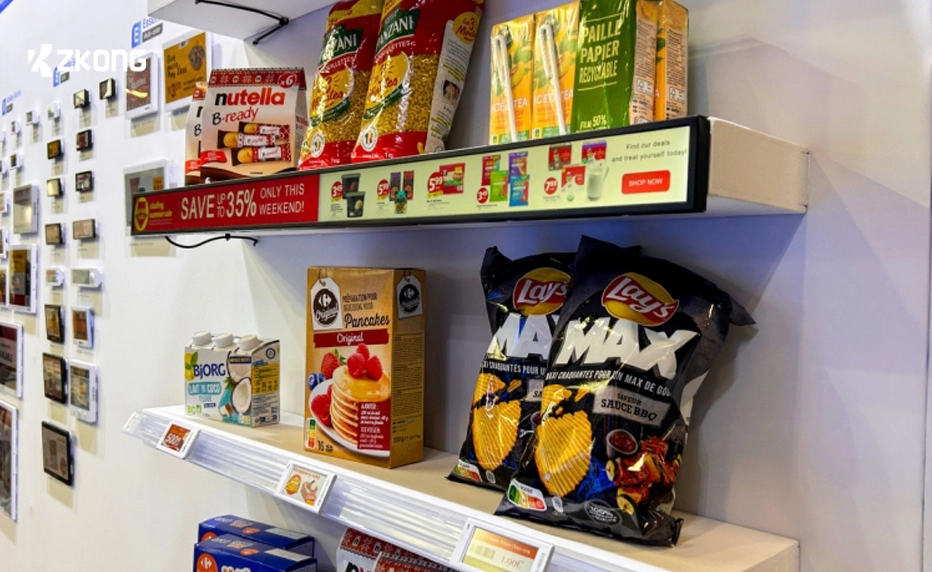
| Eliminated paper supplies (printer, paper, ink, label stock) | $8,500 |
| Eliminated labor for daily price updates (3 hrs/day × $25 × 365) | $27,375 |
| Reduction in mismatch consumer-protection fines | $15,000-30,000 (state-dependent) |
| Margin from real-time competitor price matching | $18,000 |
| Reduction in overstocked perishables (real-time markdown) | $10,000 |
| Eliminated lost sales from out-of-stock displays (ESLs show stock status) | $8,000 |
| Total per store | $87,000-102,000/yr |
| Total chain-wide (50 stores) | $4,350,000-5,100,000/yr |
Payback timeline (chain-wide)
Year 1: $6,745,000 invested. Stores roll out at ~5/quarter, so average store ramps 50% through year 1. Realized savings: ~$1,800,000.
Year 2: All stores operational. Full annual savings of ~$4,725,000.
Year 3: Full annual savings continue. Cumulative savings now exceed cumulative costs.
Payback: ~24 months from project start. By year 3, you’re $2.7M ahead and accruing $4.7M/yr in pure savings.
Compare to: doing nothing. Year 5 of paper-tag operation costs you ~$23M in cumulative labor + supplies + fines + lost margin. ESL deployment cost: ~$7M. Net delta: $16M over 5 years.
What the calculator usually gets wrong
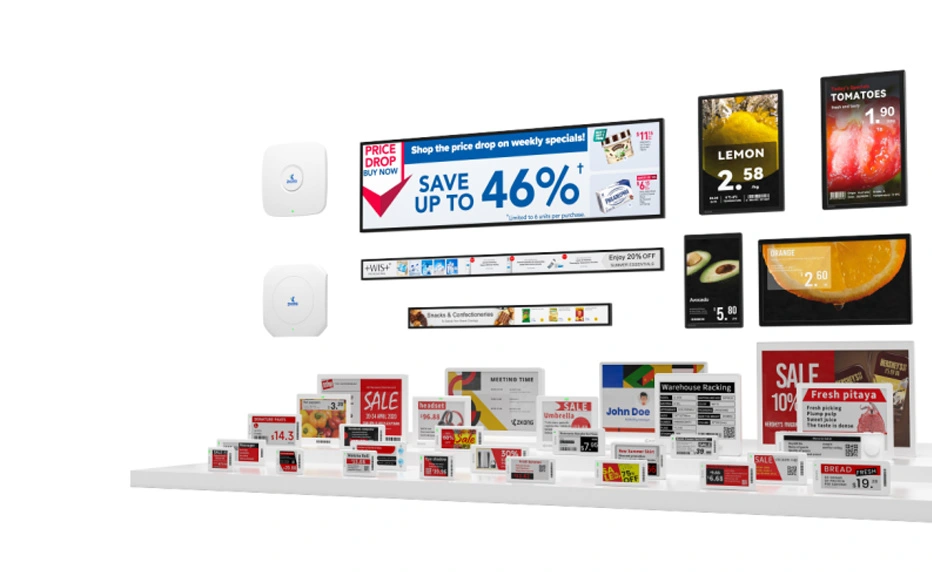
Common errors in vendor ROI tools:
- Ignoring access points and installation. They quote per-label cost only. Add 15-20% for the full deployment.
- Assuming day-1 full savings. Realistic ramp is 60-80% in months 4-6, full by month 9-12.
- Skipping integration work. POS / ERP API hookup is real engineering time, even if your vendor has an off-the-shelf connector.
- Skipping change-management. Floor staff need training; managers need to update SOPs. Budget 4-8 weeks of part-time effort per store.
- Optimistic mismatch-fine reduction. Depends heavily on state laws. California: huge. Vermont: small.
Even with these adjustments, ESL deployment is one of the highest-ROI capital projects available to mid-size grocery in 2026.
Try the interactive calculator
Want to plug in your own numbers? Open our ROI calculator — adjust store count, SKUs, labor cost, and current labor hours to get a personalized payback estimate.
Or talk to us for a 15-minute custom estimate based on your specific store layout and ERP setup.
Want a personalized recommendation?
15 minutes on a screen-share — we look at your specific stores and recommend SKUs.
Related articles


Kamran Abdullayev
Sales Director, North America at Retail Digitals (ZKong USA), the United States distributor of ZKong electronic shelf labels. Based in New York City. Writes on US ESL deployment, regulatory compliance (AB 3214, FDA 21 CFR 101.11, METRC), and honest competitor comparison.