
Who can benefit from IoT warehouse solutions?
Retail Digitals’ warehouse IoT stack pairs electronic shelf labels with digital signage to give every role on the floor what they need — in real time. Hardware ships from US stock and is installed nationwide by certified crews.
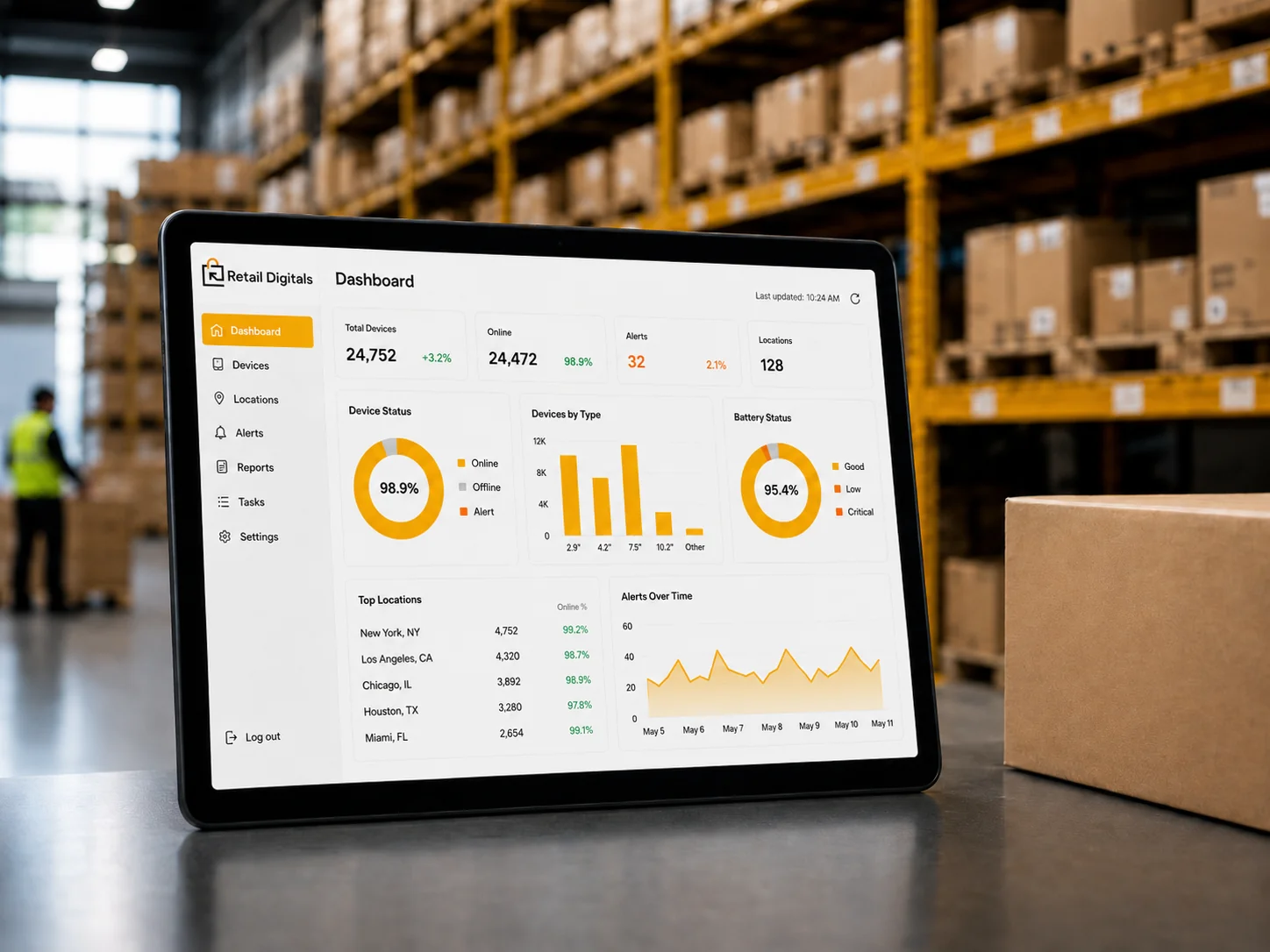
Warehouse Manager
IoT solutions like ESL and digital signage can provide real-time data on inventory levels, order statuses, and operational metrics, which can finally realize Inventory Management Improvement and Streamlined Communication.
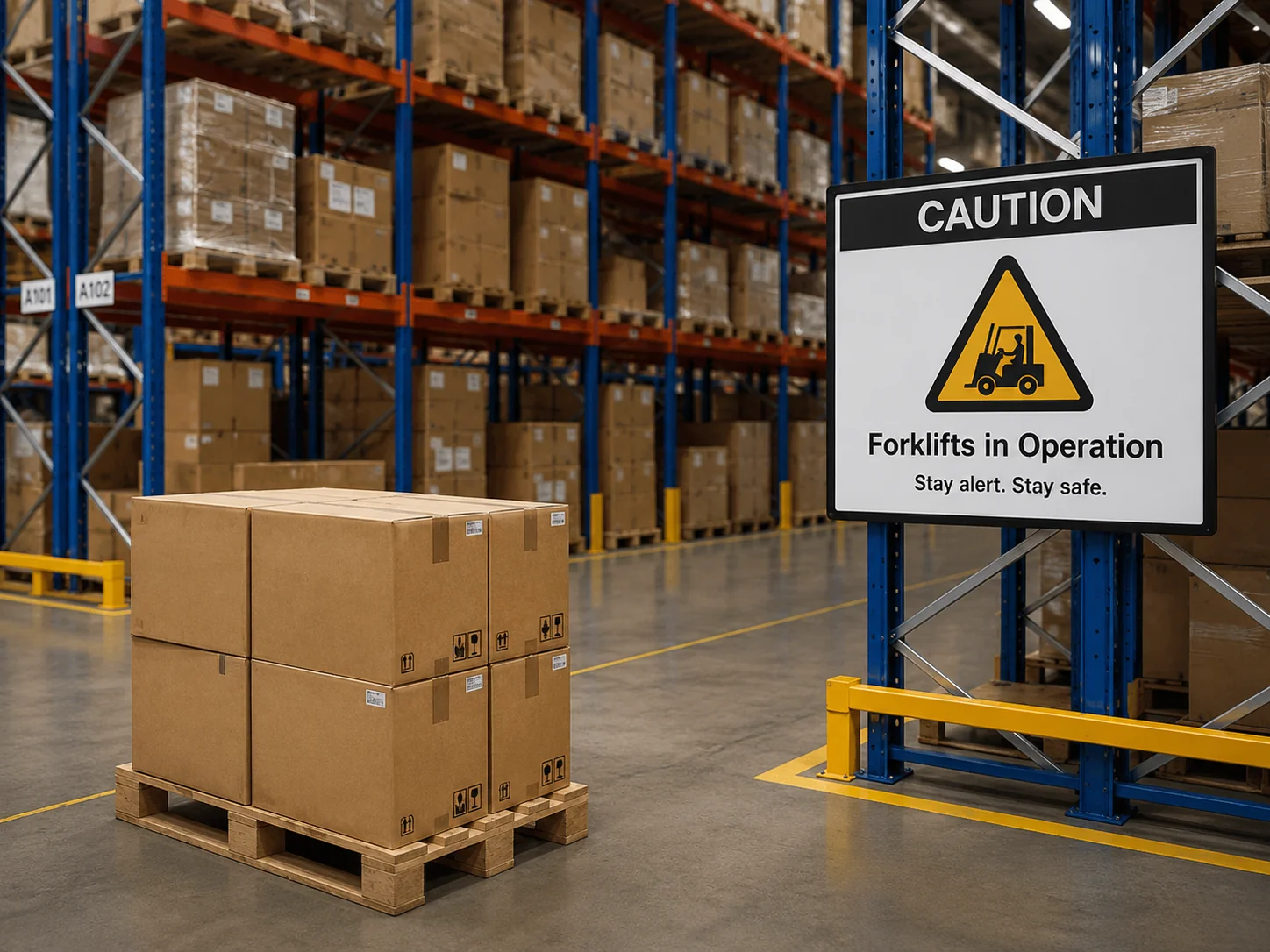
Warehouse Worker
Digital signage in warehouses can display real-time information on order statuses, picking routes, and task assignments. This helps workers stay organized and efficient, reducing downtime and errors.
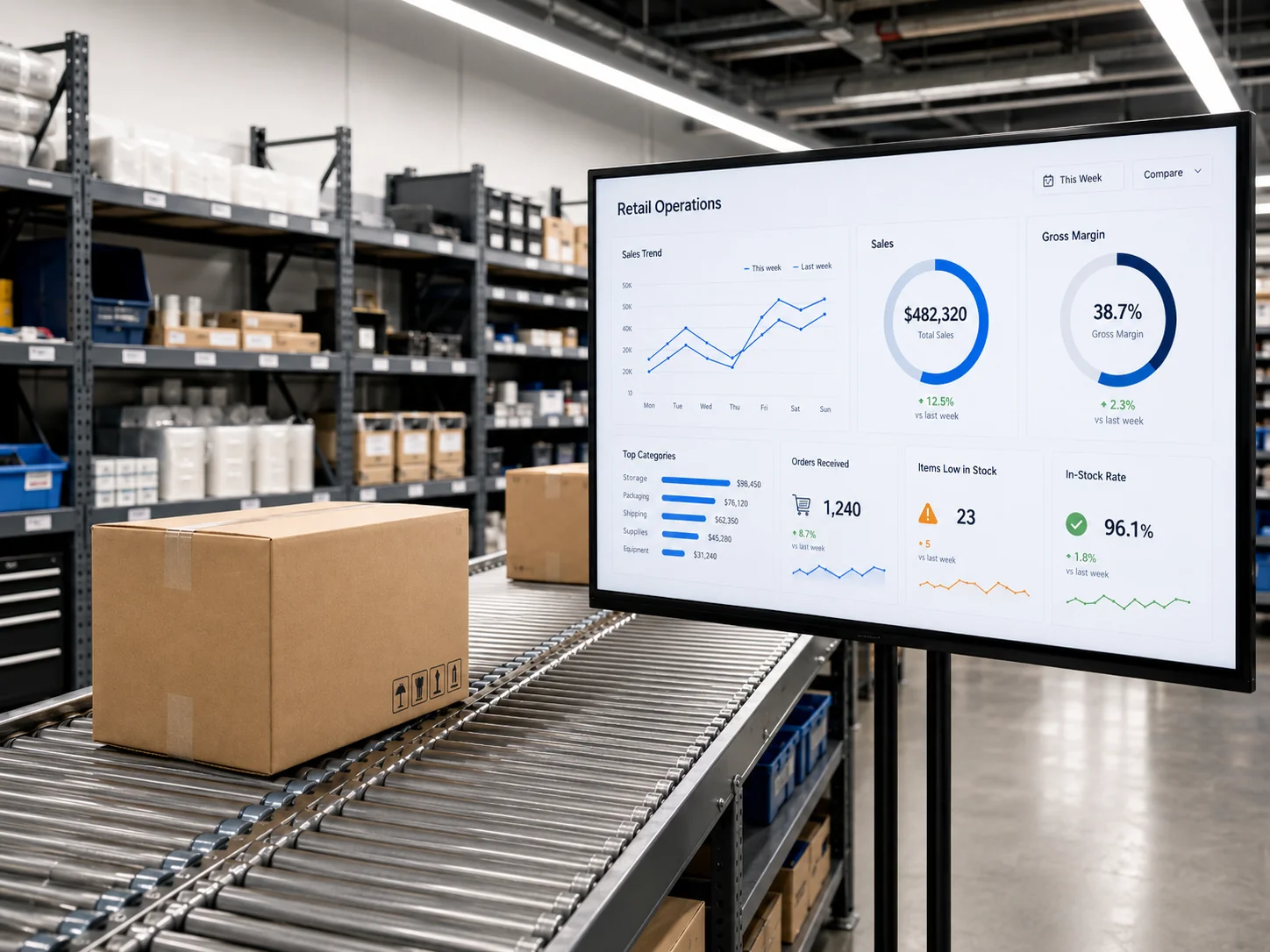
Supply Chain Partners
IoT warehouse solutions enable better communication and collaboration. Real-time data sharing ensures that all parties have access to the same information, reducing misunderstandings and delays.
ESLs in the warehouse
Warehouse ESL: replace bin labels with smart, networked shelf-edge tags.
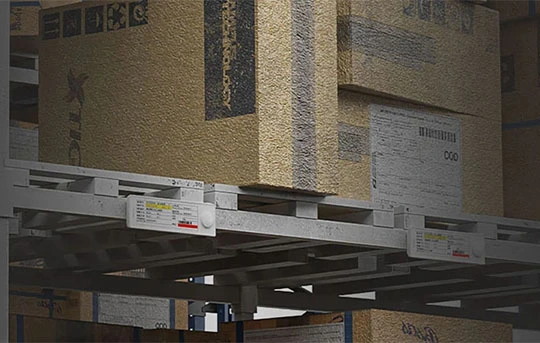
From rack-level to item-level, our electronic shelf labels sit on every storage location and pull live data from your WMS/ERP. Update pricing, stock counts, pick instructions, or item swaps from one dashboard — changes land in seconds, not shifts.
- Inventory accuracy 63–95% on item-level tagging in third-party benchmarks
- NFC tap-to-confirm picks so a phone or scanner closes the loop on every line
- 7-year battery, full-color e-ink — no recharging carts, no paper waste
- Integrates with your WMS via REST API, EDI, or flat-file import
Digital signage on the floor
One central screen network across every aisle, dock, and zone.
Strategically-placed LCD displays show the right information in the right place: pick lists at staging, order priorities at packing, safety alerts at hazards, and KPIs in the manager’s office.
- Real-time order & pick-list display at packing tables and staging areas
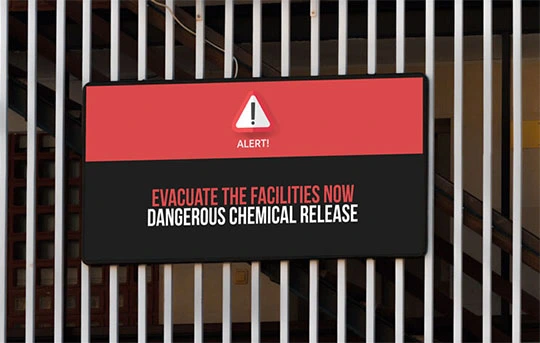
- Safety & emergency alerts pushed instantly to every screen in any zone
- IoT-integrated — temperature, humidity, dock door status, conveyor health all visible
- Centrally managed from the same dashboard that runs your ESLs
Why warehouses are switching from paper to ESL.
Global supply chains have outpaced the tools running them. Same-day delivery, marketplace ordering, and SKU explosion all mean warehouse teams are pushing more lines per hour than ever — with the same paper-label workflow from 1995.
The fix isn’t more people. It’s better signal at the shelf edge. An ESL warehouse deployment puts that signal on every rack, bin, and pallet. Electronic shelf labels are already standard on the retail side of the supply chain. Warehouses are the next mile.
Centralized control — not yet another tool
Our ESLs and digital signage connect to a single cloud platform that talks to your existing WMS, ERP, and order management system. Base stations cover the floor wirelessly. Every label, every screen, every sensor lives in one place. Push an update from a laptop in the front office; it lands on every rack within seconds.
Depending on scope, ESLs sit at rack-level, shelf-level, or down to the bin/item. 63–95% inventory accuracy on item-level tagging — published case-study range across third-party warehouse deployments.
From manual to automated
It’s 2026 and ~43% of US small businesses still manage inventory manually. That’s a lot of clipboards. The cost shows up as miscounts, mis-ships, and weekend physical counts.
An automated stack — RFID + ESL + digital signage on top of a real cloud platform — cuts the clipboards. You get faster inventory, faster fulfillment, fewer returns from shipping the wrong SKU, and real-time visibility into where every order line stands. That’s lower labor cost, lower operational cost, and a faster cash cycle.
Where the operational lift shows up
- ✓ Labor hours saved on relabeling — one click replaces an hourly shelf walk
- ✓ Pick-error rate down because location codes always match what’s actually there
- ✓ Cycle counts go from weekly to continuous — the system is the count
- ✓ Audit / chain-of-custody made simple — every label change is logged with timestamp + user
- ✓ Safety + compliance signage pushed in seconds, not printed and walked around
Ready to pilot in your warehouse?
Most pilots start with one aisle or one zone. We deploy hardware, sync to your WMS, and prove out the labor savings in a fortnight — not a fiscal quarter.