
The 2024 inflection point
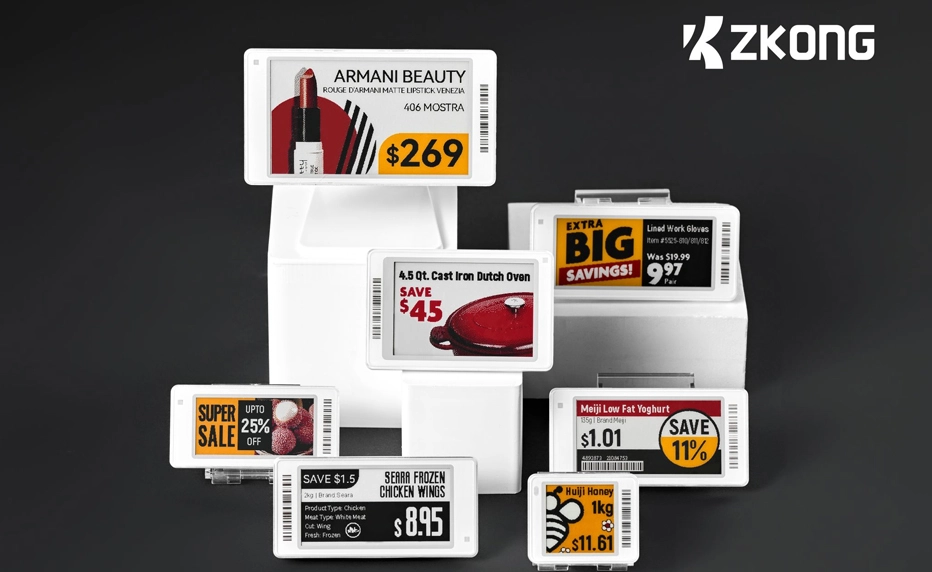
For two decades, electronic shelf labels were “interesting technology that’s coming someday.” Then in 2024, Walmart announced ESL deployment across 2,300+ US stores by 2026 in partnership with VusionGroup. That single announcement reset every grocery operator’s strategic calendar.
It wasn’t just Walmart. Schnucks (114 stores) committed in 2023. Kroger ran multi-year pilots that converted to chain-wide rollout in 2025. Aldi US has tested in select markets. Even regional chains like Wegmans and HEB have active deployments.
The reason isn’t fashion — it’s that the math finally crossed the threshold where ESLs pay back faster than the cost of NOT having them.
What changed in the math

Three things shifted the equation:
- Hardware cost dropped from $15+ per label to $3-7 per label for BWRY 4-color e-paper. A 30,000-SKU store that needed $450K in hardware now needs $120K.
- Cloud platforms became truly multi-tenant (no more per-store server installations). Setup time went from 6 months to 3 weeks per store.
- Labor costs in retail rose 30%+ post-2021, making the labor saved per ESL much more valuable. A clerk-hour eliminated from price-tag work is now $20-25 instead of $14-15 a decade ago.
For a typical 30,000-SKU US grocery store, the new math:
- Annual labor saved: ~$28,000 (3 hrs/day × 365 × $25.50)
- Paper tag supplies eliminated: ~$8,000/yr
- Price-mismatch chargebacks avoided: ~$15,000-30,000/yr (varies by state)
- Margin gain from real-time competitor matching: ~$15,000-25,000/yr
- Total: ~$66,000-91,000/yr saved per store
One-time cost: ~$120,000 for 30,000 labels at $4 average + $25,000 for access points and installation. Payback: 19-24 months single store, dropping to 12-15 months at 5+ stores due to amortized setup.
The hidden driver: consumer protection laws
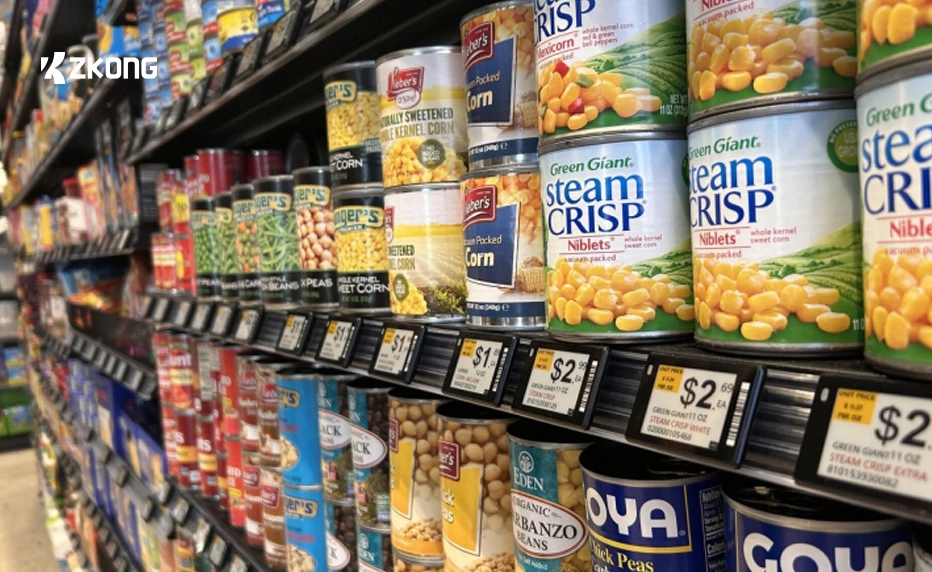
The labor savings are real, but the stronger driver is risk. Many US states (California, New York, Massachusetts among the strictest) have consumer-protection statutes that fine retailers for shelf-vs-POS price mismatches.
In California, the penalty per mispriced item rung up wrong is $50-1,000 depending on circumstances. Multiply by the 0.3-0.5% mismatch rate typical of paper-tag operations and a 30K-SKU store sees 90-150 mismatches per quarter. Even at the low end of the fine range, that’s $4,500-7,500 per store per quarter — $18,000-30,000 per year.
ESLs make this risk go to ZERO. Shelf and POS draw from the same source of truth. They CAN’T disagree.
What mid-size chains should do now

Major chains are setting the pace. Mid-size operators (10-100 stores) face a different question: “When and how, not whether.”
The right answer for most regional chains:
- Pilot one store, one department this quarter. Pick the dairy aisle (high-velocity SKUs, frequent price changes). Deploy 100-200 labels. Measure baseline labor.
- Full single-store deployment in Q2. Roll out to all departments. Measure labor savings vs baseline.
- Multi-store rollout starting Q3. 5-10 stores per quarter using the playbook from your pilot.
The buying decision: most mid-size chains don’t need to go through Vusion’s enterprise sales process. Direct distributors like Retail Digitals sell ZKong ESLs in any quantity from US warehouses, with US support, and no enterprise contract. Order today, ship next week, install Q2.
What to watch in 2026-2027
The next phase is already visible:
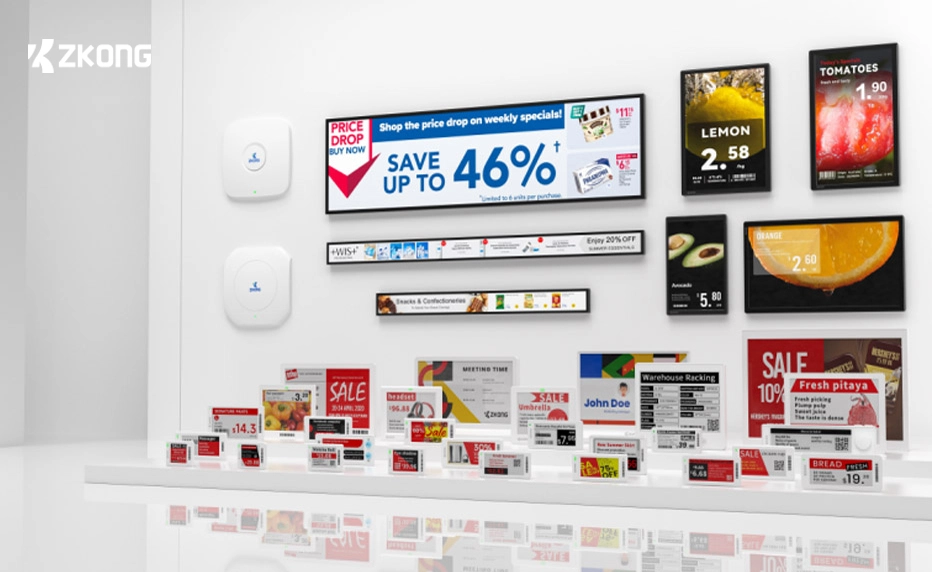
- 6-color (Spectra 6) becoming mainstream as panel costs drop. Expect $5-8/label for 4″-7″ 6-color by mid-2027.
- Shelf-edge bars displacing multiple individual labels. ZKong’s Arrow series (10.95″-22.74″ wireless e-paper) is the leading example.
- AI-driven dynamic pricing integrating with shelf cameras (planogram compliance) and demand signals.
- Cross-vendor cloud platforms letting retailers mix hardware brands within one console — reducing vendor lock-in.
Retailers who deploy in 2026 will be ready for these layers. Retailers who wait until 2028 will be playing catch-up.
Want a personalized recommendation?
15 minutes on a screen-share — we look at your specific stores and recommend SKUs.
Related articles


Kamran Abdullayev
Sales Director, North America at Retail Digitals (ZKong USA), the United States distributor of ZKong electronic shelf labels. Based in New York City. Writes on US ESL deployment, regulatory compliance (AB 3214, FDA 21 CFR 101.11, METRC), and honest competitor comparison.