
Why retailers leave SoluM mid-contract
The most common reasons we hear from US retailers switching off SoluM Newton ESLs onto ZKong: enterprise contract terms (multi-year minimums, escalator clauses), slow support response from regional partners, and the rigidity of getting custom hardware variants approved. None of these are dealbreakers if you’re a 500+ store chain — but for independents and regional chains, they grind.
That’s why migration questions come up. If your contract’s expiring or you’re still in pilot phase, switching is genuinely doable in 4-8 weeks per store with low operational risk. Here’s the playbook.

The bad news first: hardware doesn’t cross-talk
SoluM Newton ESLs talk to SoluM SSP cloud platform via a proprietary 2.4 GHz radio protocol. ZKong ESLs talk to the ZKong cloud via a different 2.4 GHz protocol. They cannot share the same gateway, and a SoluM ESL cannot be re-paired to ZKong cloud. Migration means full hardware replacement.
This is the same story for every brand-to-brand migration in ESL-land — Vusion to Hanshow, Pricer to SoluM, etc. It’s not unique to ZKong.

What CAN move over: the data
Three things transfer cleanly from SoluM SSP to ZKong cloud:
- SKU master data: SoluM SSP exports product catalog as CSV. ZKong cloud imports the same fields (SKU, barcode, name, price, unit, category) directly via web upload or REST API.
- Label templates: The visual templates (logo position, font sizes, price formatting) don’t auto-port — you rebuild them in ZKong cloud, but the design is reusable. Allow ~2 hours per template.
- Store + zone mapping: Aisle/section names, planogram references, store IDs. Export from SoluM as CSV, import to ZKong.
What doesn’t transfer: the ESL-to-SKU pairing (since you’re replacing the ESLs), historical analytics from SSP (lives in their cloud), and any custom integrations you wrote against SoluM’s API.
Suggested rollout sequence
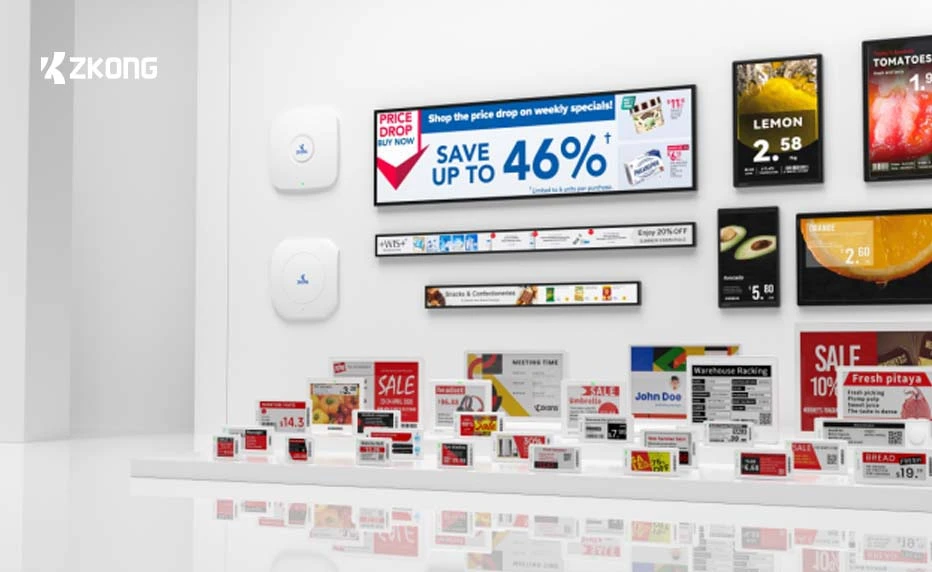
- Pilot store overlap (week 1-2): install ZKong gateways and sample labels in one section while SoluM still runs the rest. Test side-by-side. Gateways from different brands don’t interfere with each other on shared 2.4 GHz frequency — no co-existence risk.
- POS feed reconfig (week 2): add ZKong cloud as a second sync target alongside SoluM. Same source data, two destinations.
- Section-by-section swap (week 3-6): remove SoluM from one aisle at a time, replace with ZKong. Same week, you scan barcodes to pair the new ESLs to existing SKUs (using ZKong’s mobile app or bulk CSV).
- Decommission SoluM gateway (week 7-8): once last SoluM ESL is removed, gateway can be powered down and returned per your contract terms.
Per-store cost is purely the new hardware + labor — no migration software fees, no data conversion fees.
Gotchas worth knowing
Battery disposal: SoluM Newton uses CR2477 coin cells. If you’re scrapping working hardware, batteries can be removed and recycled separately (Call2Recycle drop-off at any Home Depot or Best Buy). Don’t throw whole ESLs in regular trash.
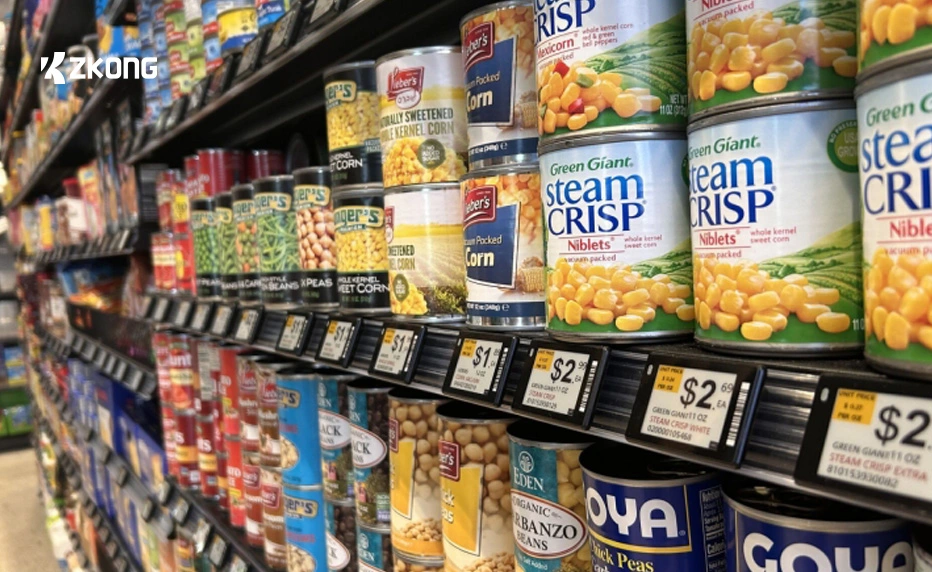
Labels per shelf-clip compatibility: SoluM clips and ZKong clips have slightly different mounting profiles. Confirm physical fit on your shelf type before bulk ordering — request samples and test on actual fixtures. Most modern gondola shelving accepts both, but freezer rails and some specialty fixtures vary.
Contract escape: read your SoluM master service agreement carefully. Some contracts require 90+ days notice; some have liquidated damages clauses for early termination during the initial term. Most retailers we’ve helped wait until natural expiration rather than pay early-termination penalties.
Cost comparison after migration
Across the migrations we’ve scoped: total cost of ZKong hardware + cloud subscription typically runs 30-50% lower over a 5-year horizon than SoluM’s enterprise contract structure for under-200-store chains. The savings are concentrated in two places: no enterprise contract minimums, and US-stock shipping (no global allocation queues).
That math reverses at chain scale (500+ stores) where SoluM’s account team and global logistics start to outweigh the per-unit cost premium. Your size determines which way the math falls.
Currently on SoluM and curious about migration?
30-minute call to map your specific contract terms, store count, and hardware against a ZKong rollout sequence. No obligation, no hard sell.