
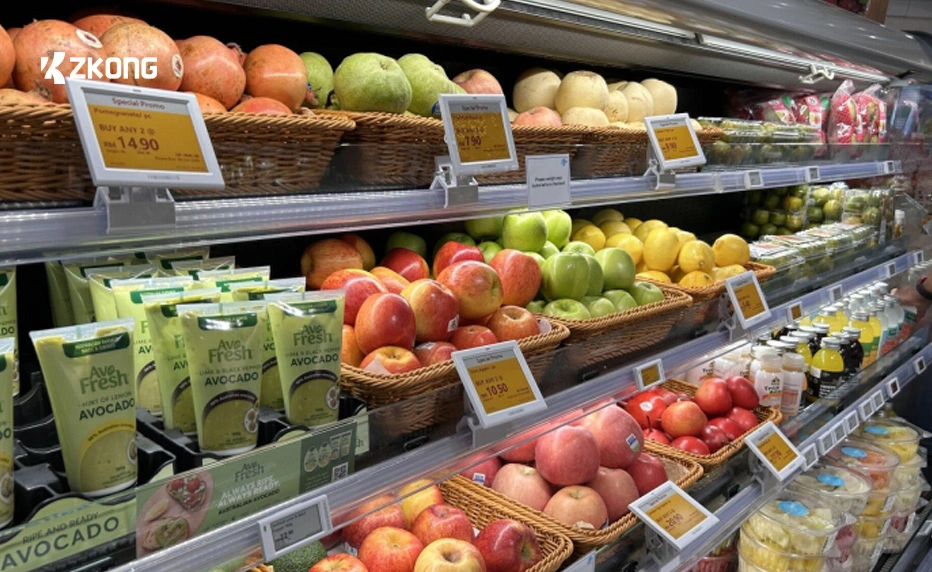
The shelf in a licensed cannabis dispensary is one of the most heavily regulated surfaces in US retail. THC and CBD percentages, terpene profiles, batch numbers, harvest dates, lab certificate references, and warning text are mandatory in most states, and the data changes every time a new batch hits the floor. The dispensary chains that have moved to ESLs in 2025 and 2026 are not doing it primarily for shrink reduction; they are doing it because manual paper-based shelf labels are functionally non-compliant with state seed-to-sale tracking requirements at any reasonable operational tempo.
METRC Integration: The Foundation
METRC is the seed-to-sale tracking system used in 23 US cannabis-legal states as of 2026, including California, Colorado, Michigan, Massachusetts, Maine, Missouri, Nevada, Ohio, and others. Every cannabis product on a dispensary shelf has a METRC package tag, a batch ID, and a set of tested values (THC%, CBD%, total cannabinoids, sometimes terpenes) that flow from the lab to the cultivator to the distributor to the retailer. When the batch on the shelf changes, every one of those values changes.
A native METRC connector pulls the package metadata directly from the state API and pushes it to the ESL platform without manual re-entry. ZKong Cloud’s METRC connector, deployed by Retail Digitals to seven dispensary clients to date, polls the state API every 15 minutes and updates affected labels within roughly 18 minutes of a new batch being received. The alternative — and what most dispensaries running ESLs today actually do — is a manual workaround where a budtender exports a CSV from the dispensary POS (Dutchie, Flowhub, Treez, Cova) and uploads it to the ESL platform once or twice a day. The CSV workaround is operationally fine for most chains; it just adds a 4 to 6 hour latency between batch receipt and shelf label update, which matters less in a dispensary than in a fast-moving grocery context.
State-Specific Labeling Requirements
The federal floor for cannabis labeling is non-existent (cannabis remains Schedule I), so the requirements come from state statute and rule. The five states with the most prescriptive shelf labeling rules in 2026:
California (AB 195 and BCC Title 16)
California requires THC content per package, CBD content per package, the standardized cannabis warning symbol, the universal symbol with batch number, and the lab certificate of analysis reference. Shelf labels in California can carry a subset of this (the package itself carries the full set), but the THC% and CBD% must match the lab COA exactly. Mismatches are a license-risk issue, not a fine-only issue.
Colorado (HB 1085 and MED Rules)
Colorado shelf labels must include batch number, harvest or production date, total THC and total CBD, the universal symbol, and the source license number. Colorado also requires that any per-serving information match the package serving size, which becomes complex for edibles where the same brand sells multiple package sizes.
New York (Cannabis Law Article 4 and Office of Cannabis Management Rules)
New York’s adult-use program, operational under Cannabis Law Article 4, requires THC and CBD content, batch number, source license, and the New York-specific universal symbol. New York also requires terpene profile disclosure for products marketed with strain or terpene claims, which is unusual and affects shelf label design directly.
Michigan and Massachusetts
Both states follow the METRC core data set with state-specific symbol overlays. Michigan’s MRA rules require batch and harvest date prominence; Massachusetts CCC rules require warning text size minimums (1/16 inch on packages, replicated on shelf labels in most dispensary practice).
Frequent THC, CBD, and Terpene Updates
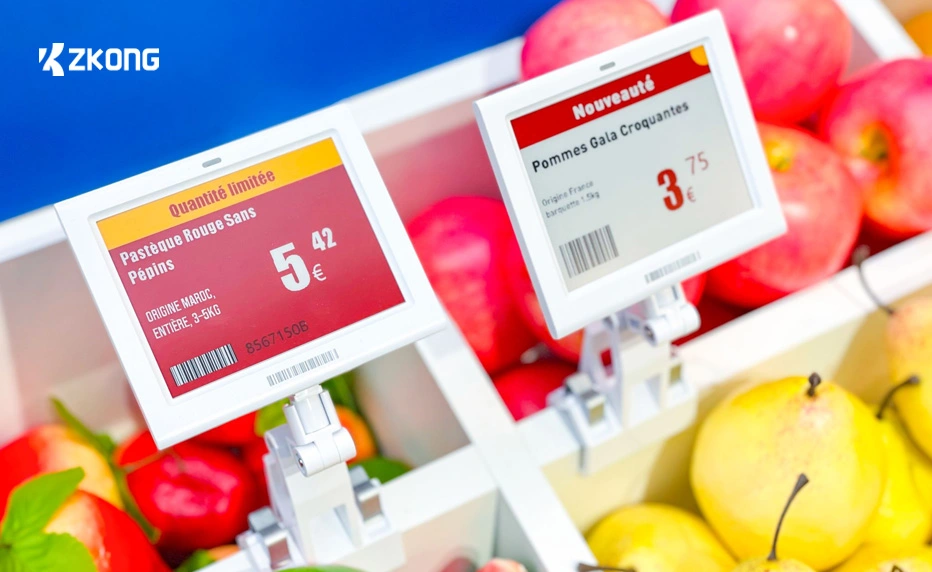
The operational reality that distinguishes cannabis from any other US retail category: every batch is different. A dispensary carrying 80 flower SKUs sees roughly 25 to 45 batch turnovers per week, each requiring updated THC%, CBD%, and (where applicable) terpene values on the shelf. Manual paper label re-printing for that volume runs a budtender 4 to 7 hours per week per location. ESL automation collapses that to roughly 30 minutes of QA review per week.
The labels themselves work harder in cannabis than in grocery: a typical dispensary label refreshes 1.4 to 2.1 times per week, against 0.3 to 0.6 times per week in mainstream grocery. Battery life calculations need to account for this; a ZKong Nebular 2.9″ BWRY label running at dispensary refresh rates achieves 5 to 7 years rather than the 8 to 10 years quoted at grocery refresh rates.
Anti-Shrink in the Dispensary Context
Cannabis retail loses 1.4% to 2.8% of revenue to a combination of price errors, expired-batch sales, and inventory walking out the door. The price-error component is meaningful in cannabis specifically because price changes happen frequently in response to inventory aging (dispensaries discount aging flower aggressively to move it before potency degradation becomes a complaint vector). Manual paper shelf labels lag the POS by hours or days; the discount that the manager intended for a Friday sale shows up on the shelf Saturday afternoon, and the chain has been selling at full price during the highest-traffic window. ESLs collapse the lag to minutes and recover roughly 60% of that price-error component.
Sample Deployment Pattern: 6-Location Chain
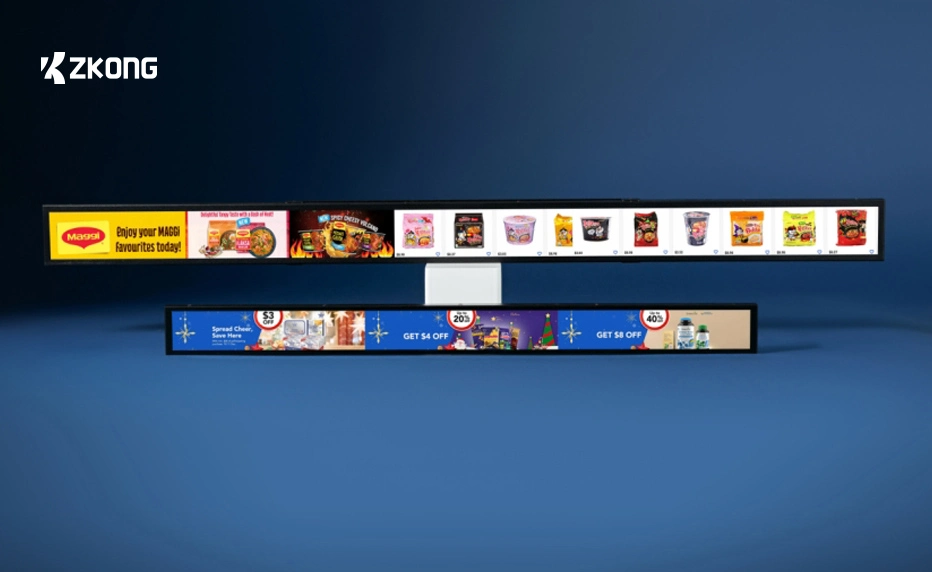
A six-location dispensary chain (two stores in California, three in Colorado, one in Michigan) deployed by Retail Digitals in late 2025 ran the following pattern:
- Hardware: ZKong Nebular 2.9″ BWRY for flower (1,200 labels), 4.2″ BWRY for edibles and concentrates (1,800 labels), 1.6″ BWRY for accessories (400 labels) per store
- Network: 3 Lark gateways per store, mounted to existing IT closet, PoE from existing switches
- Integration: ZKong METRC connector for California and Colorado (auto-pull from state API), Dutchie POS connector for the SKU master and pricing
- Templates: 9 templates total — flower (2 variants for indica/sativa), edibles (2 variants), concentrates, vapes, accessories, and two California-specific warning-symbol variants
- Timeline: 5 weeks from contract to all six locations live, store-by-store with one week per store
- Capex: $96,000 across hardware and install; $2,250 per month ongoing platform fees ($375 per store)
The six-month post-deployment review showed budtender label-management labor down 78%, batch-update latency down from a 6-12 hour median to under 25 minutes, and price-error shrink down from 1.9% of revenue to 0.7%.
What to Watch Out For
Three category-specific gotchas: (1) the universal symbol artwork is state-specific and licensed by the state agency, so templates must be reviewed by the dispensary’s compliance counsel before go-live; (2) METRC API rate limits are generous but real, and high-frequency polling across many locations needs to respect them; (3) some states (notably Pennsylvania and Florida) restrict on-shelf display of THC percentages, which means the template logic differs by state for multi-state operators.
For a state-specific deployment plan tailored to your license footprint and POS stack, contact us. To model the labor and shrink savings for your dispensary chain, the ROI calculator includes a cannabis-specific preset.
Sources & references
Related articles


Kamran Abdullayev
Sales Director, North America at Retail Digitals (ZKong USA), the United States distributor of ZKong electronic shelf labels. Based in New York City. Writes on US ESL deployment, regulatory compliance (AB 3214, FDA 21 CFR 101.11, METRC), and honest competitor comparison.