
What “10-year battery life” actually means
Every ESL spec sheet quotes a battery life. The claims range from 5 years (SoluM Newton Pro Extreme) to 15 years (Hanshow Nebular Pro at 2.13″+). The variation isn’t lying — it’s testing methodology.
The standard claim assumes:
- 1-3 price updates per day per label
- Stable indoor temperature (10-25°C)
- No backlight active
- Minimal NFC scan activity
- Original-spec battery from manufacturer
If your operation matches those assumptions, the spec is realistic. If it doesn’t, real-world life will be shorter.
What burns battery faster
Update frequency
1 update/day = baseline (10 years for typical BWRY label). 5 updates/day = ~5 years. 20 updates/day (real-time dynamic pricing) = 2-3 years.
Refresh size
Full-screen refresh consumes more battery than partial refresh. Some platforms intelligently do partial refresh when only price changes; others always do full refresh.
Temperature extremes
Coin-cell batteries lose capacity below 0°C and above 40°C. Freezer-rated labels (with specialized batteries) handle this; standard labels in cold environments may lose 30-50% of stated life.
NFC activity
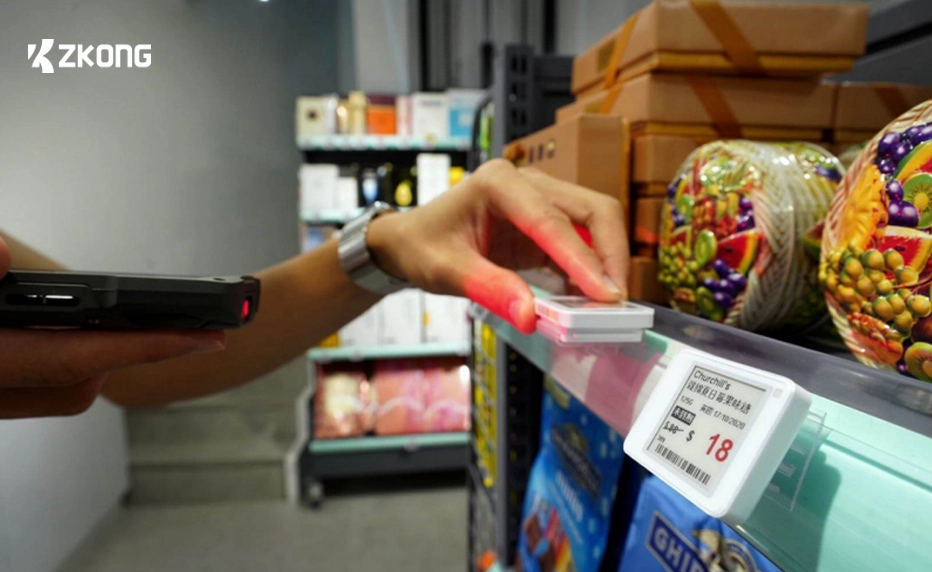
Each NFC scan wakes the radio and consumes ~0.5-2 mAh. Heavy warehouse pick environments (50+ scans per label per day) reduce battery life by 20-40%.
Display size
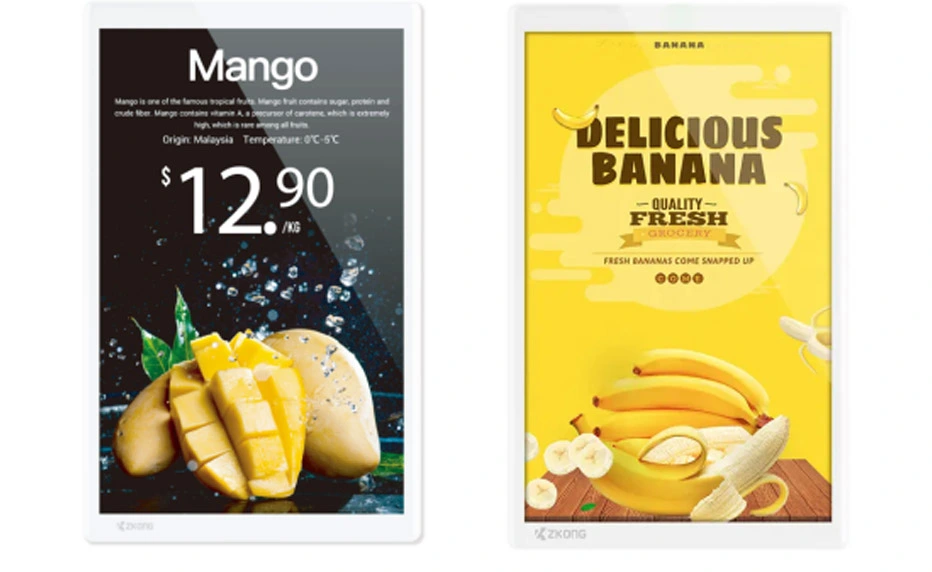
Bigger labels need more current per refresh. A 13.3″ Spectra 6 might claim 5 years vs 10 years for a 2.6″ BWRY label, even at the same update frequency.
Real-world battery life by use case
| Use case | Typical updates/day | Realistic battery life |
|---|---|---|
| Standard grocery shelf (BWRY 2.6″) | 1-2 | 8-10 years |
| Frequent-promo grocery (BWRY 2.6″) | 3-5 | 5-7 years |
| Pharmacy (BWRY 1.54″) | 1-2 | 7-9 years |
| Electronics (BWRY 4.2″) | 5-10 (price-match) | 3-5 years |
| Fashion (BWRY 4.2″) | 2-3 | 5-7 years |
| Warehouse pick (Shield 2.6″) | 1 + 30 NFC scans | 4-6 years |
| Cannabis (BWRY 2.6″) | 2-4 (per-batch updates) | 5-7 years |
| Premium endcap (Spectra 6 13.3″) | 1-2 | 4-6 years |
| Freezer aisle (Shield BW freezer) | 1-2 | 6-8 years |
How to plan replacement budget
For a typical 30,000-label store with mixed use cases:
- Average realistic battery life: ~6-7 years
- Annual replacement rate: ~14-17% of fleet = 4,200-5,100 labels per year
- Battery cost: ~$0.50 per CR2450 in bulk
- Labor to replace: ~30 seconds per label × 5,000 = 42 hours = ~$1,000/year at clerk rates
- Annual battery replacement cost: ~$3,500/store
This is much smaller than the original deployment cost ($120K) and tiny compared to annual savings ($60K-100K). It’s rounding error, but worth budgeting for.
Don’t let vendors convince you “you’ll never need to replace batteries.” You will. Plan for it.
Vendor-specific notes
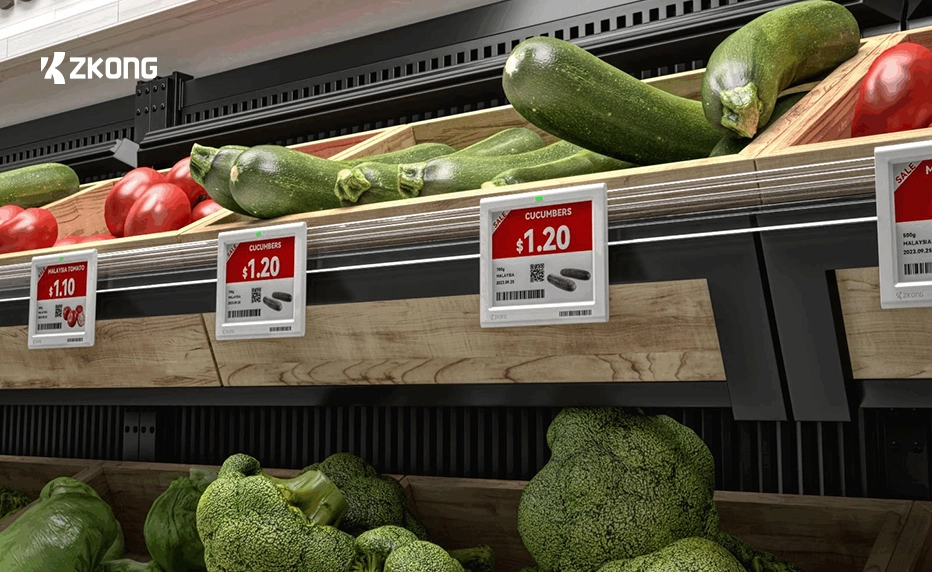
ZKong (Quantum, Valley, Blade, Shield, Essence)
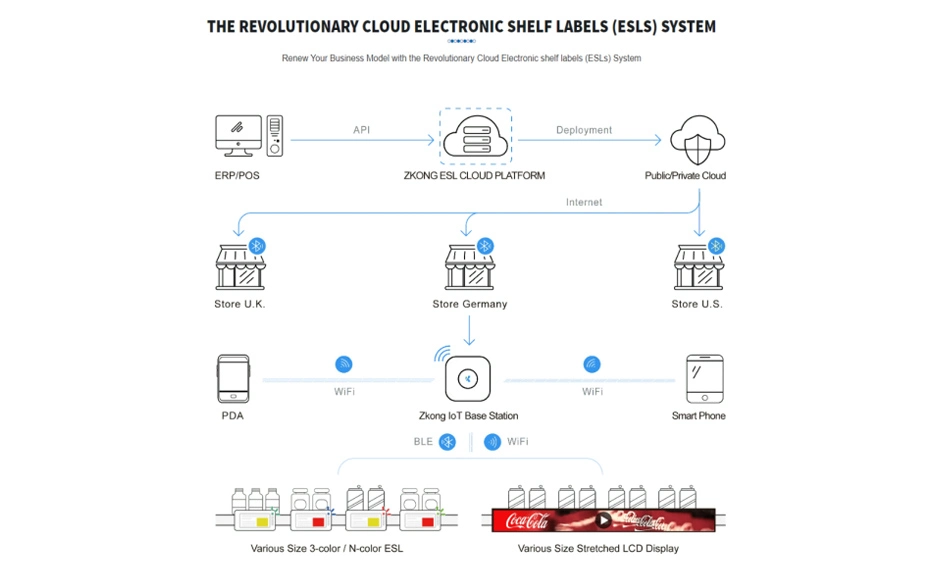
Standard CR2450 batteries. Realistic life: 5-10 years depending on series and use. Mid-pack on battery life vs competitors.
Hanshow (Nebular, Polaris, Stellar)
Claims 15 years on Nebular Pro 2.13″+ (highest in market). Real-world: 8-12 years for typical use. Best-in-class battery engineering.
SoluM (Newton Pro, etc.)
Claims 10+ years standard, 5+ years on Newton Pro Extreme (which is intentional — Extreme handles -20°C to +60°C, sacrificing battery for temperature range).
Vusion / Pricer
Claims similar to ZKong. Real-world performance comparable.
For a side-by-side comparison: see our brand comparison page.
Bottom line
Battery life claims are mostly accurate IF your use case matches the testing assumptions. For typical grocery/pharmacy operations, expect 6-10 years per label. Budget ~$3,500/store/year for replacement labor + materials. It’s a tiny fraction of total cost of ownership and a non-issue for ROI calculation.
If your use case is unusual (heavy NFC, very cold/hot, frequent updates), validate battery life with your specific vendor before committing to large deployment. Talk to us for vendor-specific guidance based on your operation.
Want a personalized recommendation?
15 minutes on a screen-share — we look at your specific stores and recommend SKUs.
Related articles

Kamran Abdullayev
Sales Director, North America at Retail Digitals (ZKong USA), the United States distributor of ZKong electronic shelf labels. Based in New York City. Writes on US ESL deployment, regulatory compliance (AB 3214, FDA 21 CFR 101.11, METRC), and honest competitor comparison.