ESLs in Malls and Multi-Tenant Retail: Why Landlords Are Pushing Them in 2026
The shift in landlord economics
Three years ago, mall landlords didn’t care what kind of price tags their tenants used. In 2026, that’s changing rapidly. Multiple Class A and Class B mall operators — Simon, Macerich, Brookfield, Tanger, and several regional REITs — have started either requiring ESLs in new lease agreements or providing subsidies for existing tenants to deploy them.
This isn’t about labels per se. It’s about three landlord-side ROI drivers that ESLs uniquely enable.
Driver 1: Foot-traffic data correlation

Modern mall operators monitor foot traffic via WiFi sniffing, anonymized phone signals, and entry counters. They can tell you tenant-by-tenant how many people walked into a store. What they can’t tell you (without ESL data feeds) is what those visitors saw on the shelf, what was promoted, and how price changes correlated with traffic.
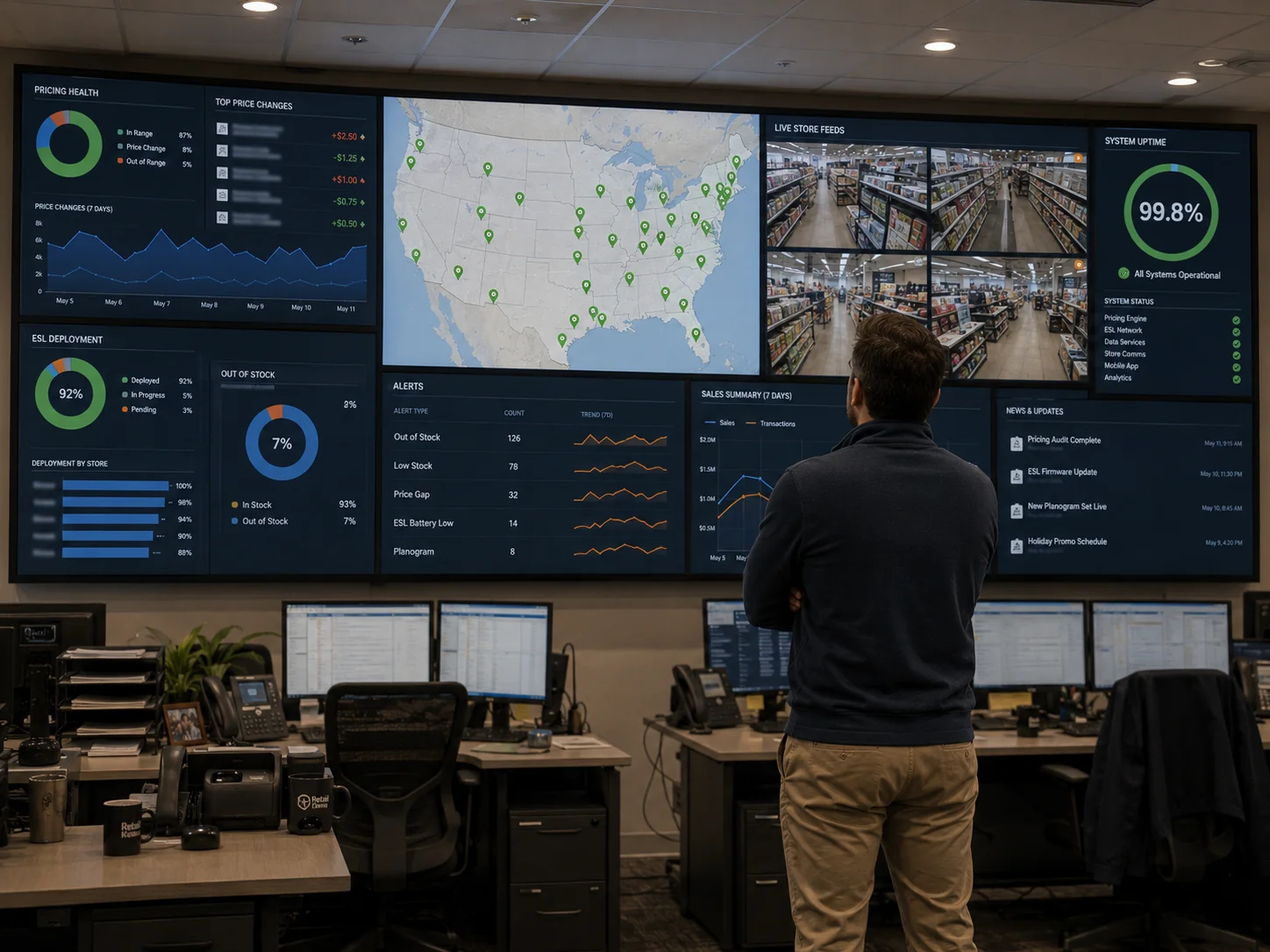
ESL platforms expose anonymized aggregated data — promotional cycles, label refresh patterns, NFC interaction counts. Landlords negotiating renewal terms with tenants increasingly want this data to justify rent escalations: “your foot traffic is up 12% in mall-wide events, but your in-store engagement metrics are flat — let’s talk about why.”
Tenants pushing back on this data sharing should know: the ESL platform is the technical mechanism, but the data-sharing agreement is a separate lease addendum. Negotiate it as a term, not as a technical reality.
Driver 2: Operating-cost reductions in landlord common areas

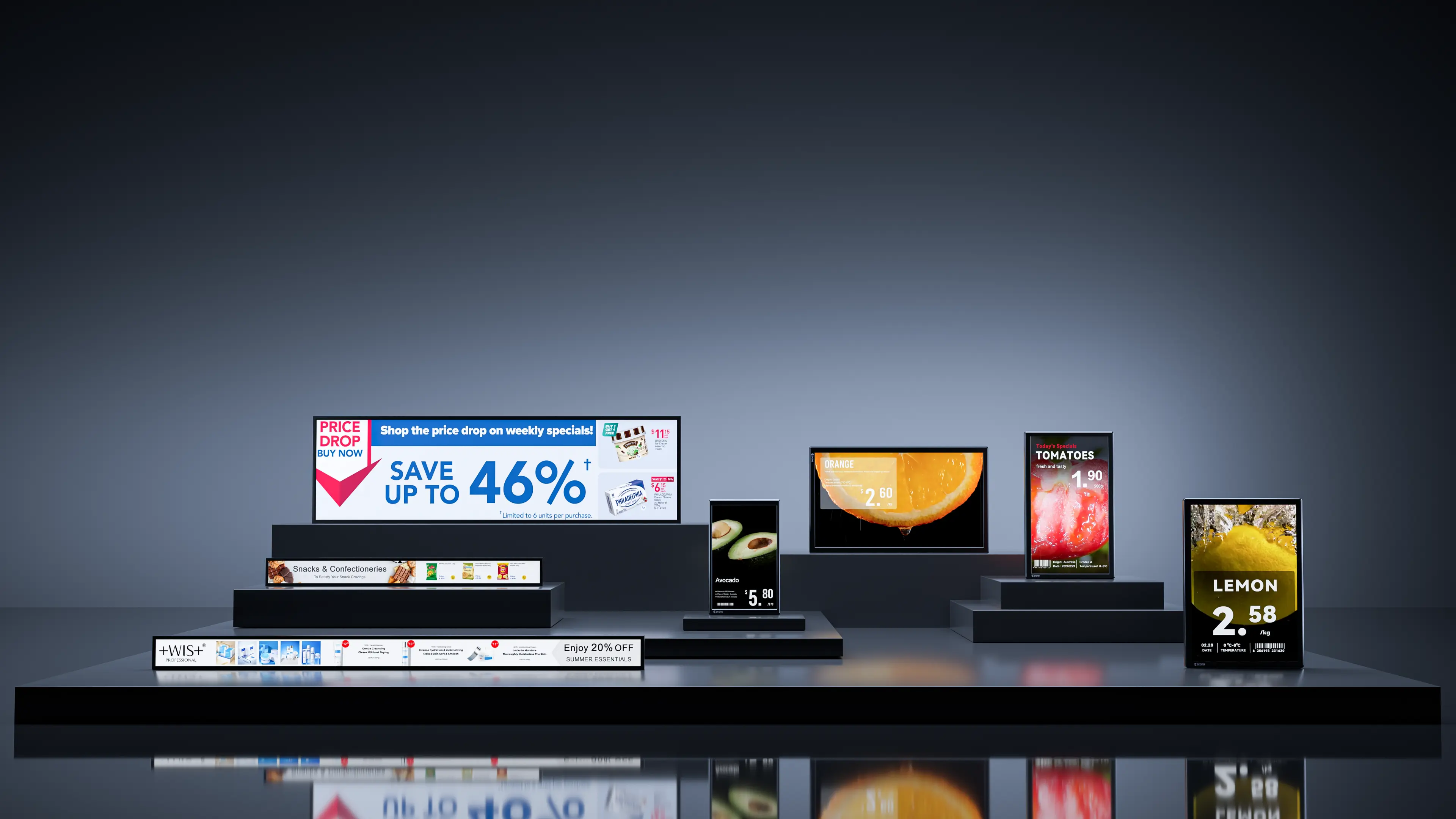
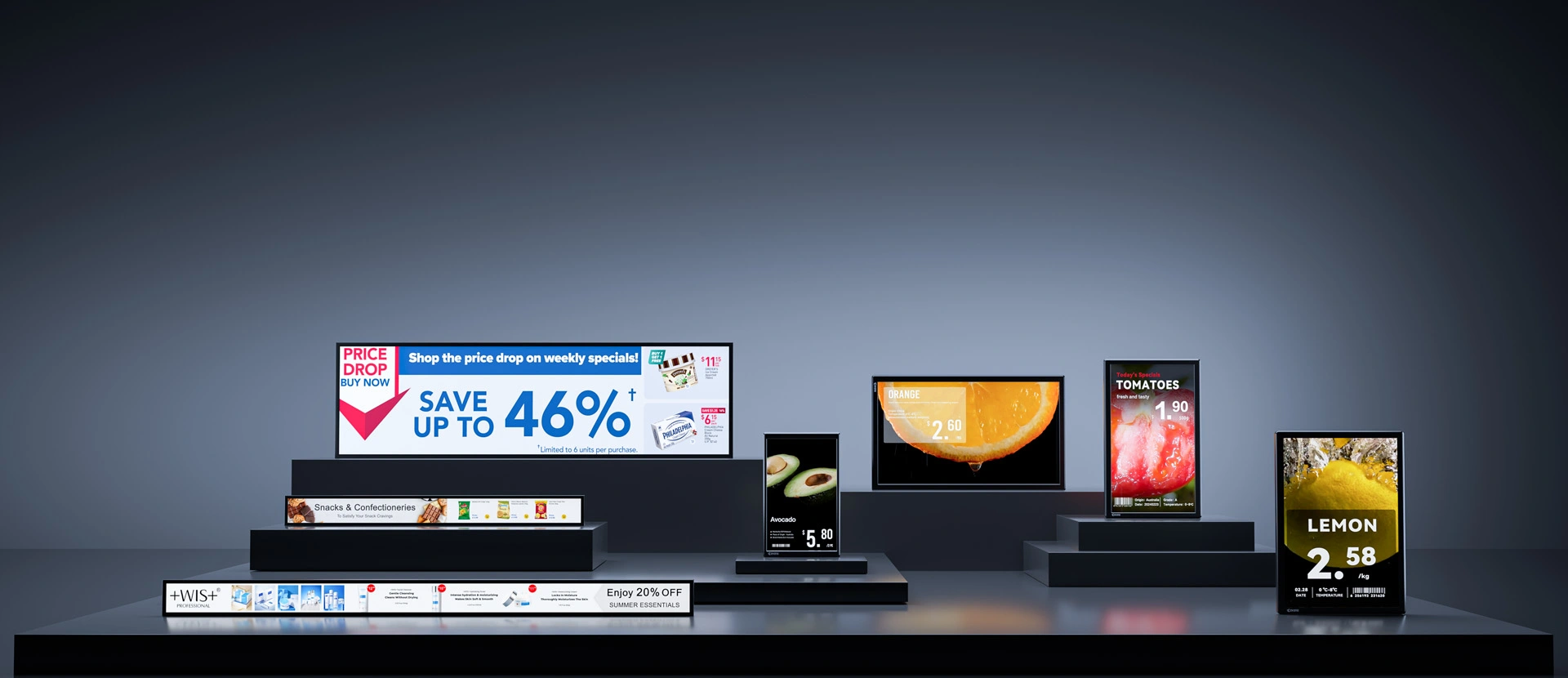
Class A malls run their own digital signage networks for wayfinding, mall-wide event promotion, food court menu boards, and parking structure messaging. The landlord operates dozens or hundreds of digital displays. ESL-class hardware (the same wireless-managed display technology that drives shelf-edge labels) is being adopted for common-area signage at significantly lower operating cost than traditional commercial signage.
The economics: a typical mall might run 200-500 digital signage units across common areas. Switching from PC-driven LCD signage ($800-$1,500 per unit installed, $50-$100/year per unit in operating cost) to wireless e-paper or low-power LCD shelf-edge bar technology ($300-$600 per unit installed, $15-$25/year per unit operating) is a meaningful capex and opex reduction at scale.
This is independent of tenant ESL deployments but uses the same vendor ecosystem. Landlords who deploy common-area shelf-edge bars also become familiar with the technology and start pushing it to tenants.
Driver 3: Tenant churn and new-tenant onboarding

When a tenant vacates and a new tenant moves in, the mall traditionally takes 4-12 weeks of vacant space and another 4-8 weeks of buildout. During buildout, the most labor-intensive part for the new tenant is setting up shelving, signage, and price-tag systems for thousands of SKUs.
If the landlord provides ESL infrastructure (gateways pre-installed in the wall, shelf rails wired for power if needed, cloud platform credentials provisioned) the new tenant deploys their inventory faster. “Move-in-ready” malls reduce vacancy times and make the leasing pitch more compelling for prospective tenants who’d otherwise view buildout cost as a deterrent.
This is why some landlords are actively subsidizing ESL deployments — they’re treating it as part of the property infrastructure rather than the tenant’s responsibility.
What tenants should negotiate

If your landlord is pushing ESL adoption in your space, several lease terms are worth negotiating:
- Subsidy structure: who pays for hardware, gateways, cloud platform fees? Some landlords cover hardware and pass cloud fees to tenant; others split. Get this explicit.
- Data-sharing scope: what aggregated data flows to the landlord? Anonymized vs SKU-level, summary vs real-time. This is a real negotiation point — don’t agree to share data you didn’t intend to.
- Vendor choice: are you locked into the landlord’s preferred ESL vendor, or can you bring your own? Some landlords mandate platform compatibility; others just provide gateway infrastructure and let tenants pick their hardware brand.
- Lease-end disposition: when you vacate, who keeps the labels? The gateways? The cloud account? This usually defaults to landlord-keeps-infrastructure, tenant-keeps-labels-and-data — but spell it out.
- Mall-wide promotional alignment: some landlords push for tenant ESL labels to display mall-wide promotional badges (“Mall Black Friday Event” etc). Your label real estate is your shelf-edge real estate. Decide what gets shared.
The economics for the tenant
Even ignoring landlord pressure, ESL ROI for mall tenants is straightforward. A typical mall-based specialty retailer (5,000-15,000 sq ft, 5,000-30,000 SKUs depending on format) sees:
- Labor reduction: 1-3 hours/day of price-tag work eliminated. At $18-25/hour fully loaded, $6,000-$22,000/year per location.
- Promotional responsiveness: mall-wide events, weekend traffic spikes, and clearance cycles all benefit from real-time price update capability.
- Shrink reduction: per category — apparel, jewelry, accessories all benefit differently. Worth modeling per category.
For a single-mall location, payback typically 12-24 months on hardware. For chains running 10+ mall locations, payback compresses to 6-12 months due to amortized cloud platform and central-template setup.
Mall-format hardware considerations
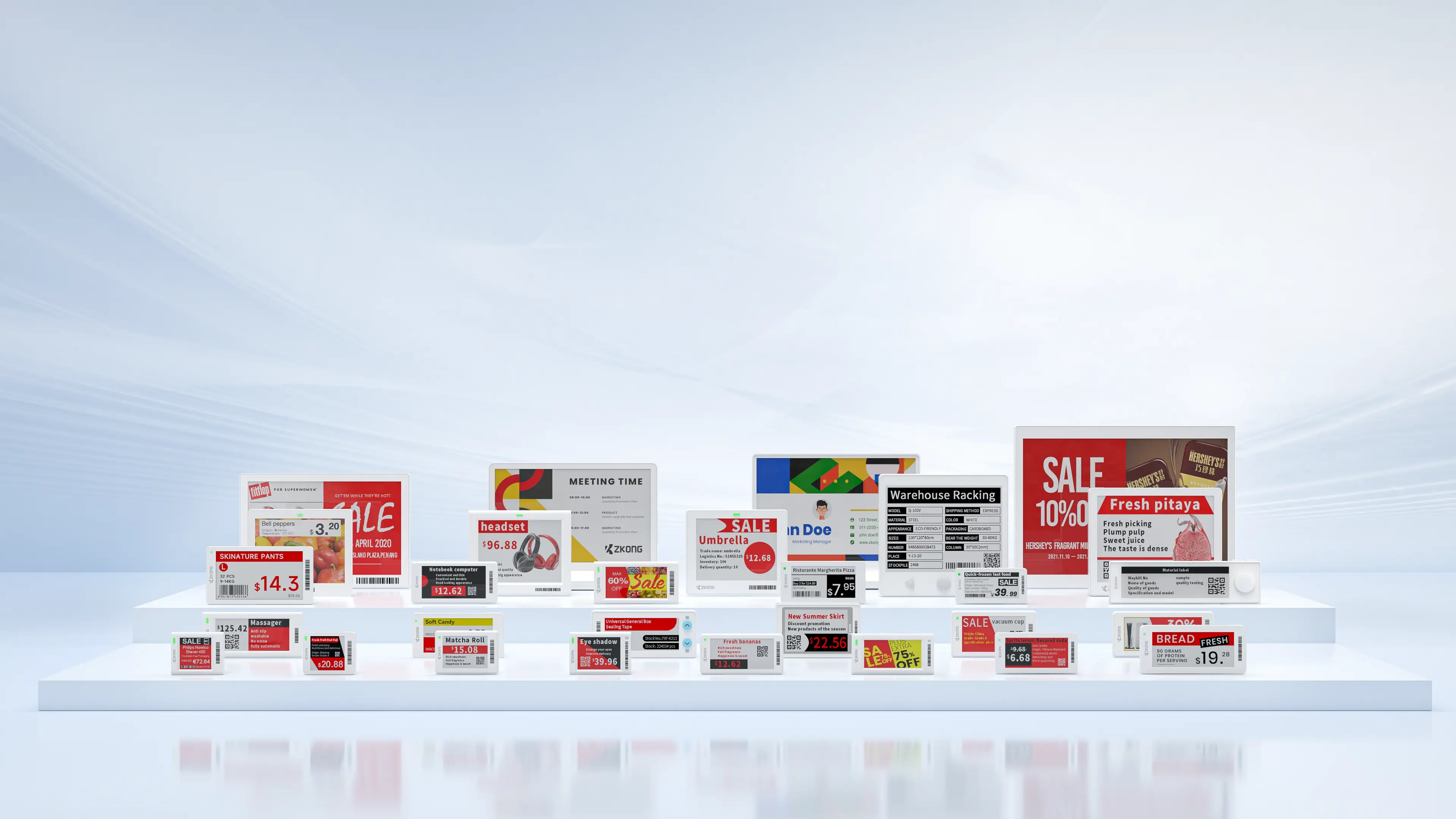
- 2.9″ BWRY for most apparel and accessories. Standard sizing, easy mounting on most fixtures.
- 4.2″ Spectra 6 for endcaps and brand-feature walls. Color matters in mall retail in a way it doesn’t in grocery.
- Wired LCD shelf-edge bars for new-arrival walls and seasonal feature displays.
- NFC support throughout. Mall customers are highly mobile-engaged; NFC tap-to-info patterns work better here than in grocery.
Mall tenant being pushed to deploy ESLs?
30-minute call to walk through your specific lease terms, fixture types, and category. We’ll tell you what’s worth subsidizing yourself and what to negotiate.
Sources & references
Related articles

Kamran Abdullayev
Sales Director, North America at Retail Digitals (ZKong USA), the United States distributor of ZKong electronic shelf labels. Based in New York City. Writes on US ESL deployment, regulatory compliance (AB 3214, FDA 21 CFR 101.11, METRC), and honest competitor comparison.