Spectra 6 (Six-Color) ESLs: When the Premium is Actually Worth It
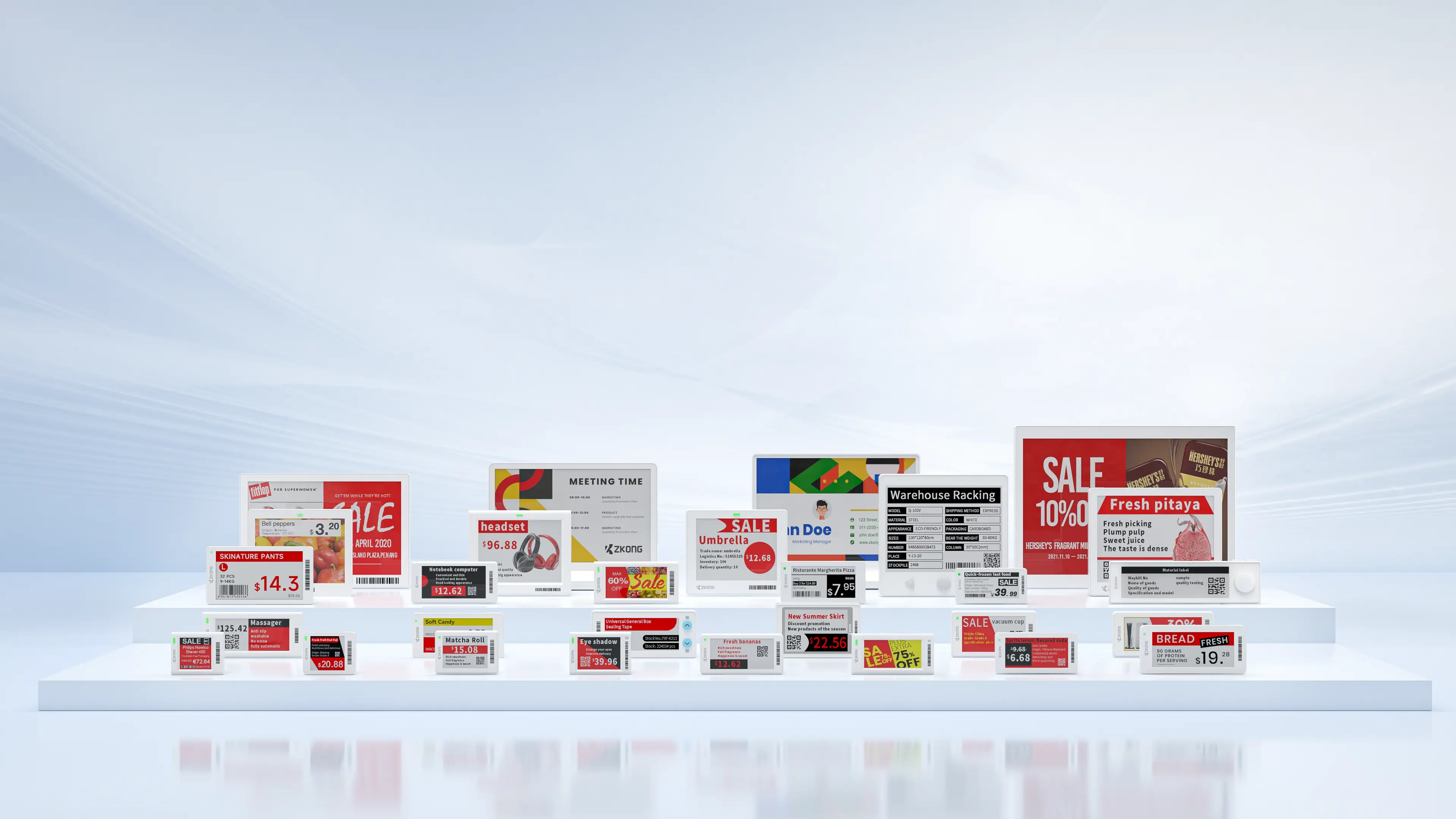
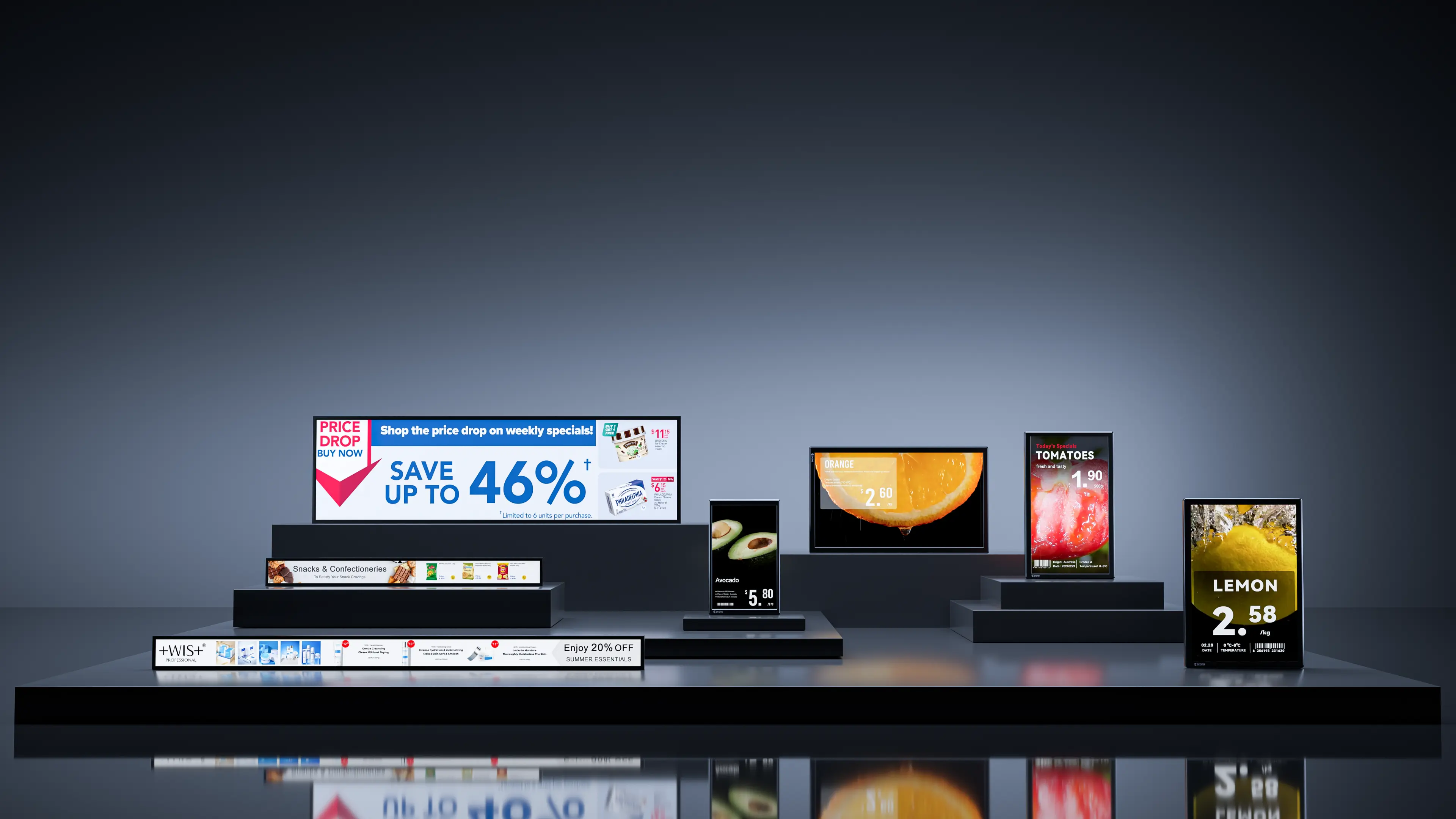
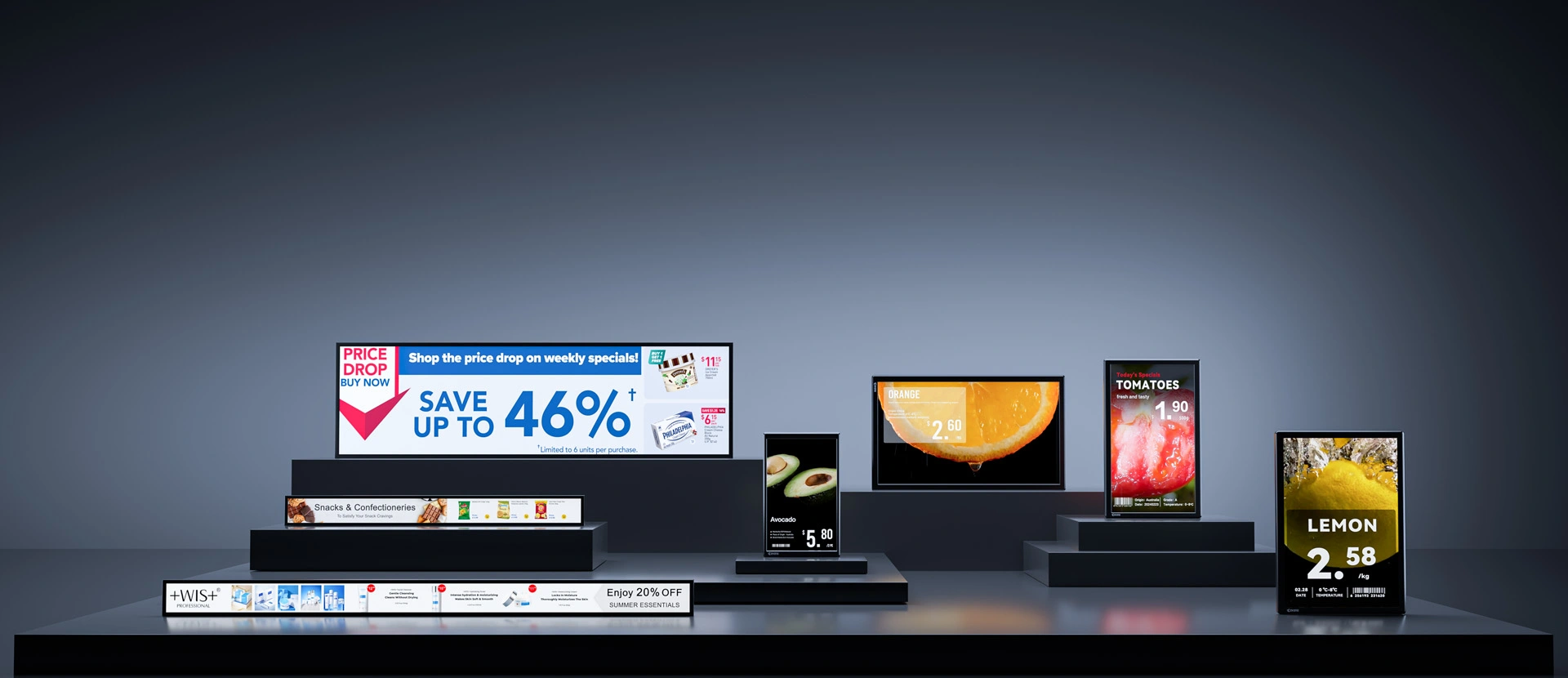
If you have seen a Hanshow Polaris Max in person, you understand the temptation. The first time a six-color E Ink Spectra-6 label refreshes a product photograph in front of you, it does not look like a shelf label; it looks like a printed brochure that decided to update itself. The temptation is to spec full-color across the whole store. The honest answer, after pricing 14 full-color deployments in the last year, is that Spectra-6 earns its 2-3x premium in roughly 9% of typical retail SKUs. The other 91% are better served by BWRY at one-third the cost and twice the battery life.
What Spectra-6 Actually Is
E Ink Spectra-6 is a six-color e-paper film: black, white, red, yellow, blue, and green pigment particles in a single microcapsule layer, addressable by waveform without a color filter overlay. That last clause is what makes it different from the older Advanced Color e-Paper (ACeP), which used a CFA layer and looked muddy under store lighting. Spectra-6 looks like printed CMYK at about 80% of the saturation you would get from a glossy photo print, and unlike ACeP it is genuinely paper-white in the white areas rather than the pale gray of CFA panels.
The competitive alternative is ZKong‘s Essence Series, which uses a 7-color e-paper film (adds orange to the Spectra-6 palette) with comparable saturation and a slightly different waveform. Both technologies reach US-shipping volumes in 2026; Hanshow Polaris Max is the only Spectra-6 product currently shipping in commercial quantities through US distribution, and ZKong Essence is the only 7-color alternative.
The Premium and What It Buys

A 4.2″ Spectra-6 label from Hanshow runs $14 to $18 in 2026. The equivalent 4.2″ BWRY label is $5 to $7. The 2-3x premium is real, and it does not include the cloud-side cost of generating and pushing color templates, which is meaningful when you are doing rotating product photography.
What you get for the premium: photographic product imagery (lipstick swatches, fabric texture, paint chips, plated food), accurate brand color reproduction (the specific Pantone red of a Coca-Cola label is recognizable, where it is just “red” in BWRY), and the ability to do graphic design that uses color as information rather than decoration (a green checkmark for in-stock, a blue badge for online-exclusive).
The Battery and Refresh Trade-offs Nobody Mentions Up Front

The battery numbers shift meaningfully. A BWRY label with one daily refresh achieves 8 to 10 years of battery life on a single coin cell. A Spectra-6 label with one daily refresh achieves 4 to 6 years. The reason is the waveform: a six-color refresh pulses each pigment to its color and back through every other color in sequence, which means a full-color refresh draws roughly 2.4x the energy of a BWRY refresh and runs roughly 18 to 25 seconds versus 4 to 7 seconds.
The refresh-time number is the operational gotcha. If your business case requires updating prices during business hours and shoppers are watching the labels, an 18-second visual refresh that walks through a full color rotation is not invisible. The label visibly cycles through hues that are not the final image. BWRY refreshes are fast enough that shoppers usually do not register them; Spectra-6 refreshes get noticed.
The practical implication for high-refresh categories (deli, produce, dynamic pricing departments) is that Spectra-6 is the wrong technology. Save it for categories where the daily refresh happens overnight and the visual upgrade is the entire point.
The Categories Where the Premium Pays Off

Three categories where Spectra-6 or 7-color genuinely earns its keep:
Cosmetics and Beauty
Lipstick swatches, foundation shade matching, eyeshadow palettes; the entire shopping experience is color comparison. A BWRY label cannot represent the difference between Ruby Woo and Russian Red, and the printed shade strips that beauty merchandisers ship today fade and yellow within six months. One major US beauty retailer that we did not deploy (they went with Hanshow Polaris Max) reported a 14% lift in in-aisle conversion in their 2025 pilot.
Photo-Quality Product Imagery
Wine, premium spirits, packaged gourmet food where the label artwork is the brand. The visual continuity between the bottle and the shelf label matters to category managers and to brands paying for shelf programs. Spectra-6 lets you mirror the product label on the shelf label.
Premium Electronics
Camera departments, audio, premium computing. Customers in these categories spend 4 to 12 minutes in front of a single shelf, and rich product photography supports comparison shopping in a way a static QR code does not. The 4.2″ and 7.5″ Spectra-6 sizes are the right form factors here.
The Categories Where It Does Not

Center store grocery, household essentials, hardware, automotive, and almost all of pharmacy. Shoppers in these categories spend 30 to 90 seconds at the shelf, the decision is price-and-availability driven, and the 2-3x premium per label evaporates against the volume of SKUs. A 50,000-SKU grocery store running full-color across the whole footprint is a $400,000 differential against BWRY for visual upgrade that the shopper does not measurably reward.
The Hybrid Deployment Pattern That Actually Works
The approach we have seen succeed in five US specialty deployments through 2025 and 2026: BWRY across 90% of the store, full-color (Hanshow Polaris Max or ZKong Essence) on the remaining 10% of high-imagery, high-margin SKUs. Both technologies operate on the same gateway infrastructure (ZKong gateways speak to both BWRY Nebular and 7-color Essence labels; Hanshow gateways do the same for their lineup), so there is no infrastructure penalty for mixing.
The hybrid approach lets the visual upgrade do work where it matters and keeps the per-store budget under control. For a 25,000-SKU grocery store with a 2,500-SKU beauty and gourmet section getting full-color, the incremental cost is roughly $26,000 for the color labels versus $1.1M to do the whole store. That is a defensible business case; the all-color version is not.
What to Spec If You Are Piloting Color in 2026
For a US retailer evaluating full-color e-paper in 2026, the practical checklist: pilot in one category (beauty, wine, or premium electronics), spec 4.2″ or 7.5″ size for the imagery to read at shelf distance, plan for 5-year battery replacement rather than the 8-10 you get from BWRY, schedule refreshes for off-hours, and budget for color template design (figure $40 to $80 per template versus $15 to $30 for BWRY). Hanshow Polaris Max and ZKong Essence are the two products that ship in volume through US distribution today.
If you are sizing a hybrid BWRY-plus-color deployment, the ROI calculator handles mixed-technology stores. For a category-specific recommendation on whether Spectra-6 or 7-color earns its premium in your assortment, contact us and we will walk through your category mix.
Sources & references
Related articles

Kamran Abdullayev
Sales Director, North America at Retail Digitals (ZKong USA), the United States distributor of ZKong electronic shelf labels. Based in New York City. Writes on US ESL deployment, regulatory compliance (AB 3214, FDA 21 CFR 101.11, METRC), and honest competitor comparison.